
Butt Fusion vs Electrofusion: Choosing the Right Jointing Method for PE Pipe
On most PE projects both methods are technically acceptable. The choice then comes down to four things: whether the pipe can be rotated, whether the joint can be reached, how much tolerance the crew has, and how the joint will be inspected. Get those four right and the cost difference usually resolves itself.
How each method actually works
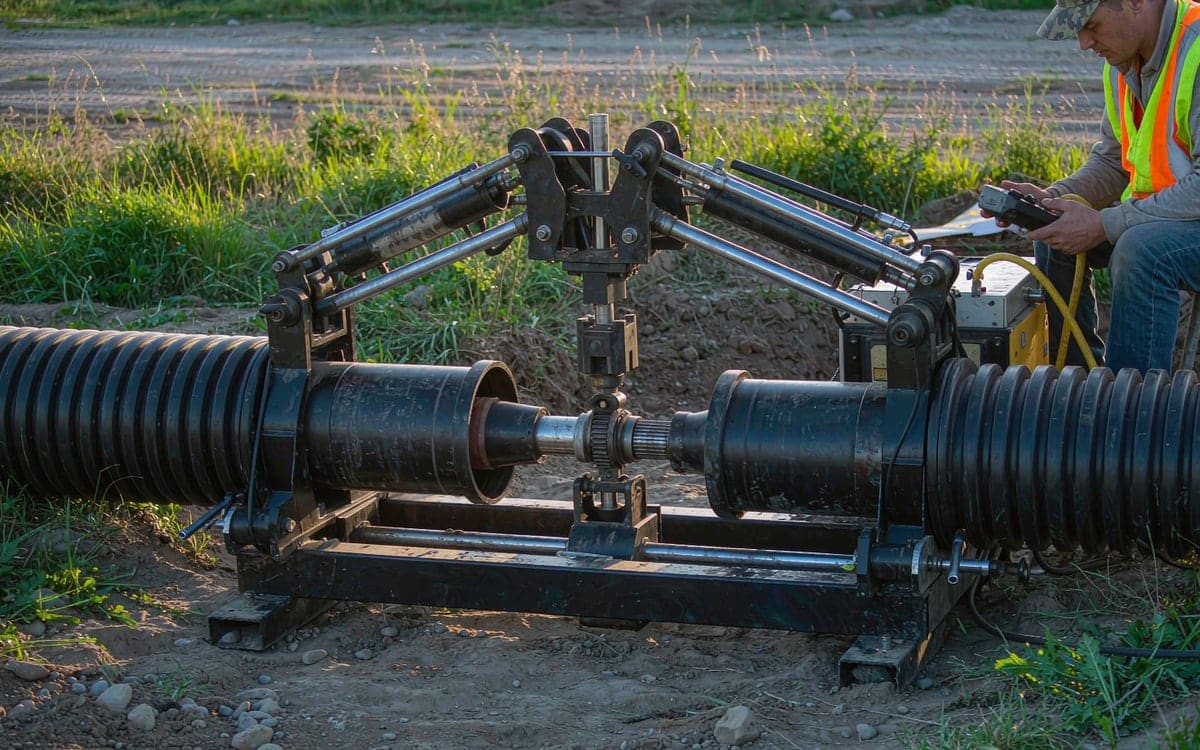
Butt fusion heats two faced pipe ends against a plate at roughly 210 °C, joins them under controlled pressure, and holds until the melt cools. The result is a homogeneous joint with an internal and external bead, as strong as the pipe wall when the parameters are right.
Electrofusion inserts a fitting with an embedded heating coil over two scraped pipe ends and passes a defined current for a defined time. The melt expands, fills the gap, and the fitting body contains the pressure. The pipe itself is not deformed.
| Factor | Butt fusion | Electrofusion |
|---|---|---|
| Typical diameter range | De63 and above | De20 to De400, best below De250 |
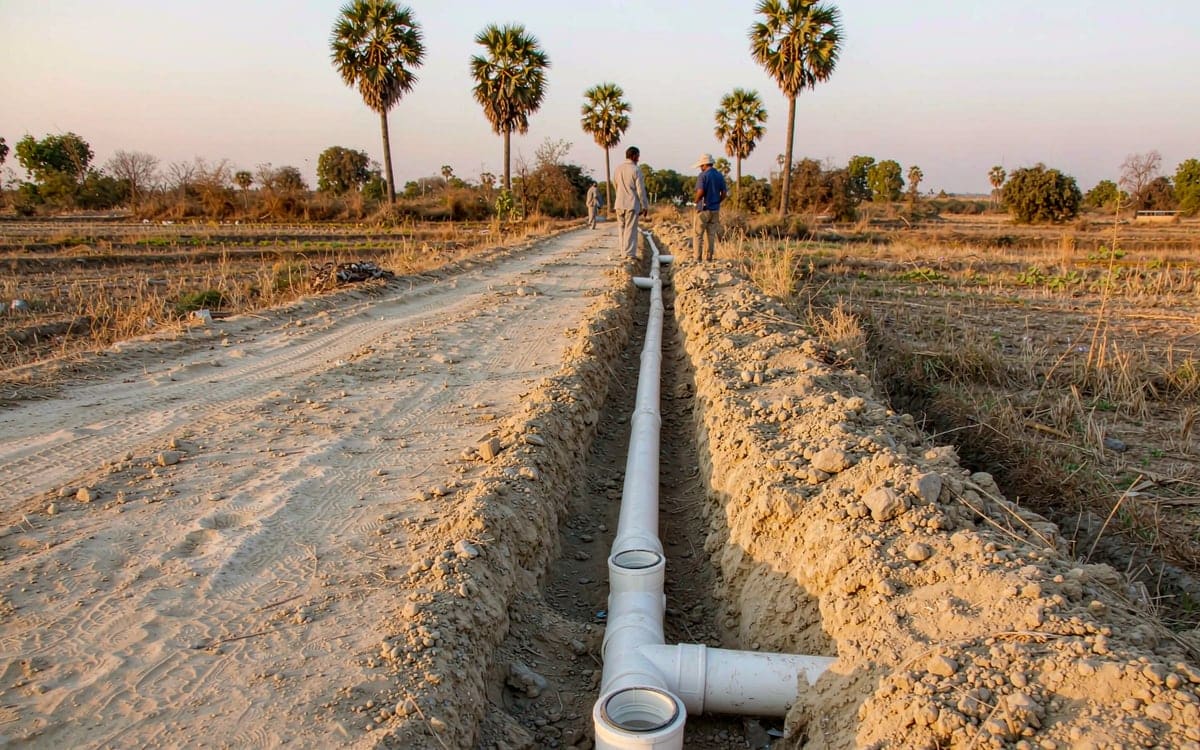
| Access needed | Straight run, room to move the machine | Trench-width access, fitting sits in place |
| Pipe movement | Pipe must be lifted and aligned | Pipe stays in the trench |
| Tolerance to misalignment | Low — needs a good facer cut | Moderate — fitting bridges small gaps |
| Consumables | Electricity, almost nothing else | One fitting per joint |
| Inspection | Bead shape, bead size, bend test on samples | Fusion indicator, log printout, peel test |
| Weather sensitivity | Wind and rain affect the heater plate | Needs a dry, sheltered trench |
Cost is rarely the deciding factor
Butt fusion wins on consumables by a wide margin: no fittings, only power. Electrofusion wins on labour and access: two men with a scraping tool and a control box can close a joint in a narrow trench without lifting the pipe.
The honest comparison is per joint, finished and tested. On a long rural main laid in open ground, butt fusion is usually cheaper. On an urban replacement where every joint sits between two live services, the extra cost of an electrofusion fitting is often less than the cost of widening the trench enough to swing a fusion machine.
Where the wrong choice hurts
- Butt fusion in a confined trench. Crews improvise alignment with jacks and slings. Alignment error becomes ovality, and ovality becomes a joint that fails a pressure test three weeks later.
- Electrofusion on wet pipe. Water in the fusion zone turns to steam and pushes melt out of the gap. The fitting cools with a hidden void and passes the visual check.
- Mixing methods without a transition plan. A PE-to-steel or PE-to-PVC transition needs a flanged or mechanical adapter, not an improvised hybrid joint.
What good practice looks like
Butt fusion: face both ends, check the swarf for a continuous ribbon, clean with 90%+ alcohol, verify plate temperature with a surface probe rather than the dial, log the pressure and time for every joint, and cut out a sample joint per shift for a bend test.
Electrofusion: scrape the full insertion depth, mark it, keep the scraper clean, clamp the fitting square, read the barcode rather than typing parameters, and download the control box log at the end of the shift. If the box has no logging, treat the joint as unverified.
A joint that cannot be documented is a joint that will be re-excavated. The inspection record matters as much as the weld.
A workable default
For diameters above De160 in open ground, butt fusion. For diameters below De160, for repairs, for tie-ins and for anything inside a trench narrower than the machine, electrofusion. For transitions and valves, flanged spigots with a properly torqued gasket. Then write the rule into the method statement so it does not get decided by whoever arrives first with a generator.
We supply pipe, electrofusion and butt-fusion fittings, and the machines that go with them, and we will help you write the jointing section of the method statement for your site conditions. Fittings and valves.
Products mentioned
 HDPE Pipe For Water SupplyHDPE pipe is a perfect solution for municipal engineering system and urban water supply an
 PP Compression Fittings1 . Product Range:Elbows, tees, couplings, reducers, ball valves, flange adapters, and mor
 HDPE Steel Wire Reinforced PipeSteel-wire reinforced HDPE composite pipe bonds a high-strength steel mesh to the plastic