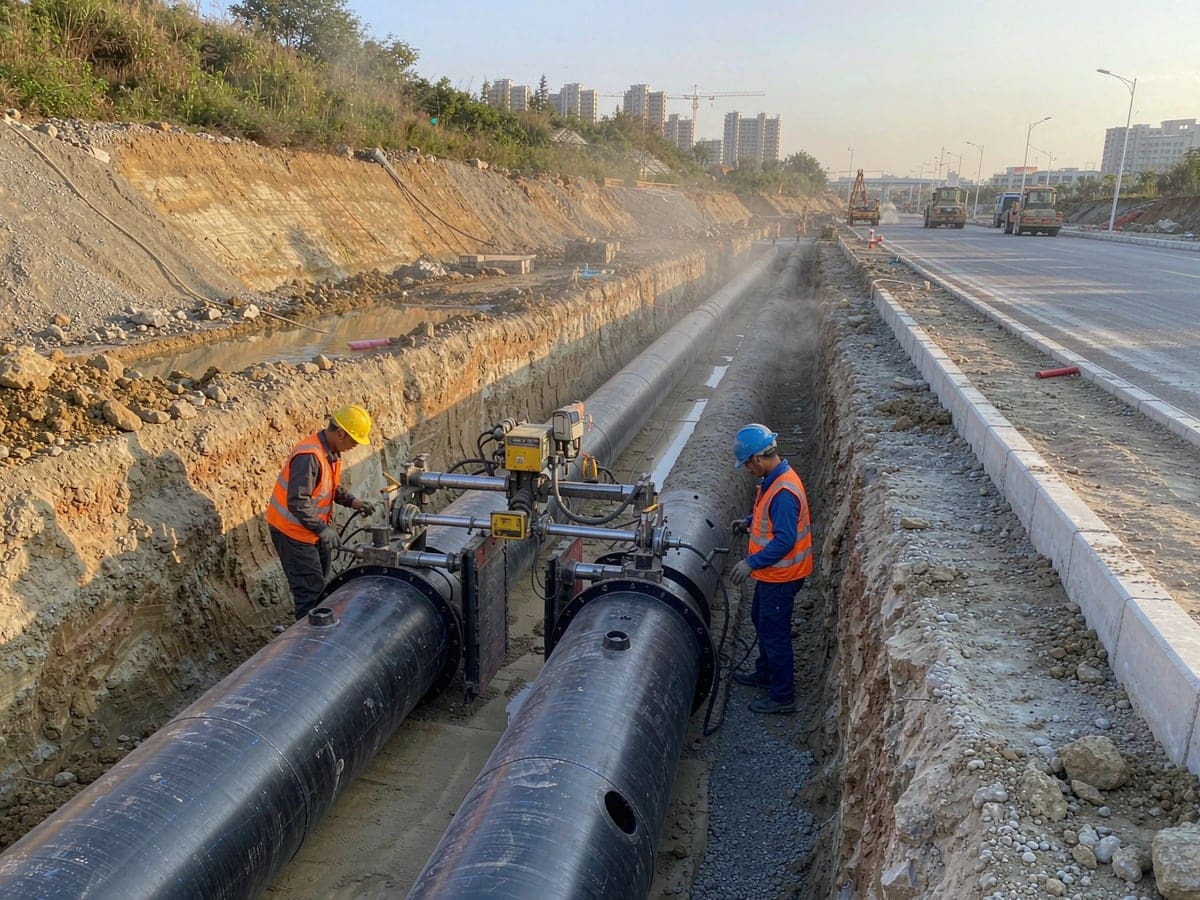

Haiphong's 220 kV overhead line runs through a district that has grown up around it. Undergrounding the last 4.2 km required a duct bank that could carry twelve cables, survive heavy truck loading, and be built without closing the avenue for more than a few nights at a time.
Why MPP
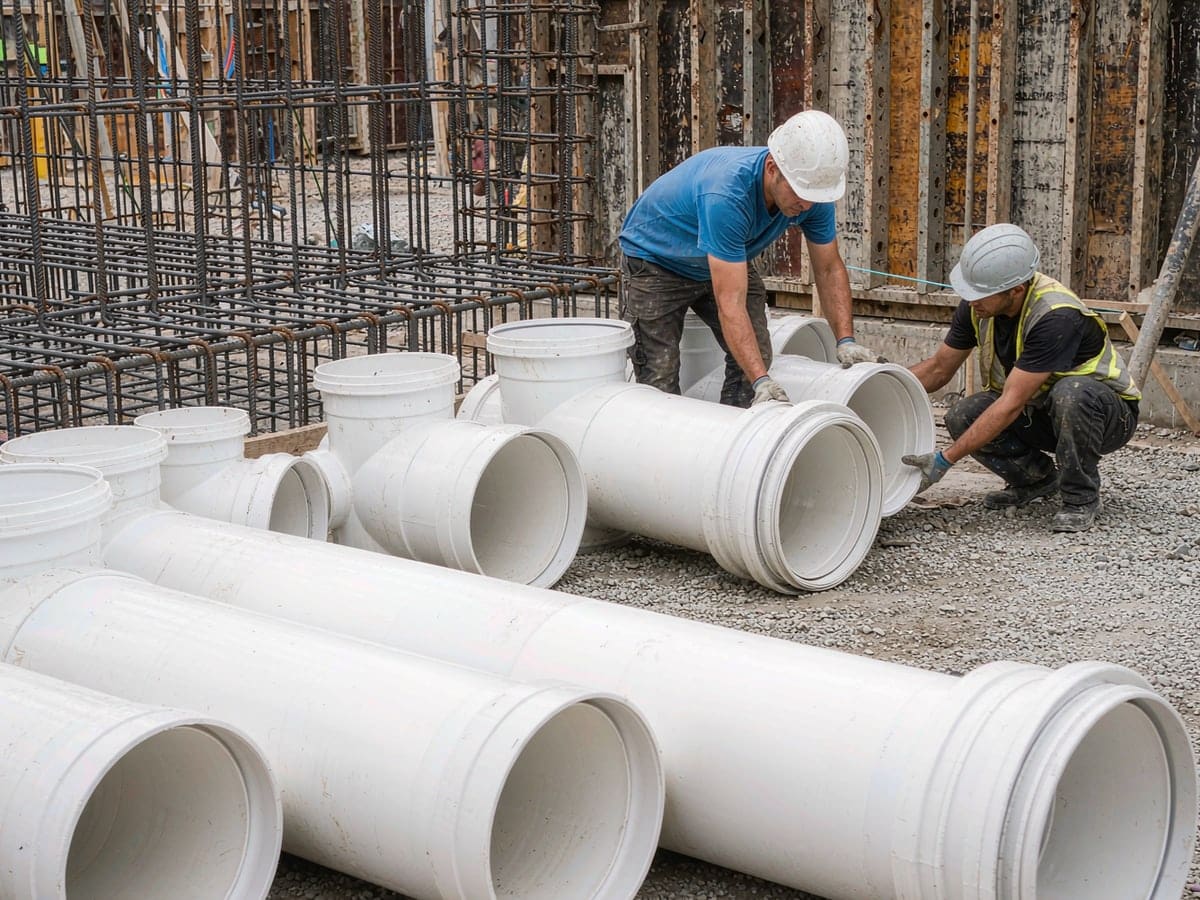
The consultant compared HDPE, PVC and MPP for this section. HDPE was rejected on heat resistance at the cable derating study, PVC on impact strength under the road loading and on joint fragility during pull-through. Modified polypropylene conduit held its shape at 90 °C conductor temperature, had the ring stiffness for 2.5 m cover under a highway, and could be jointed by socket fusion into a continuous, watertight duct.
Scope
- MPP 175 mm outside diameter, 14 mm wall, 4.2 km total including spare ducts
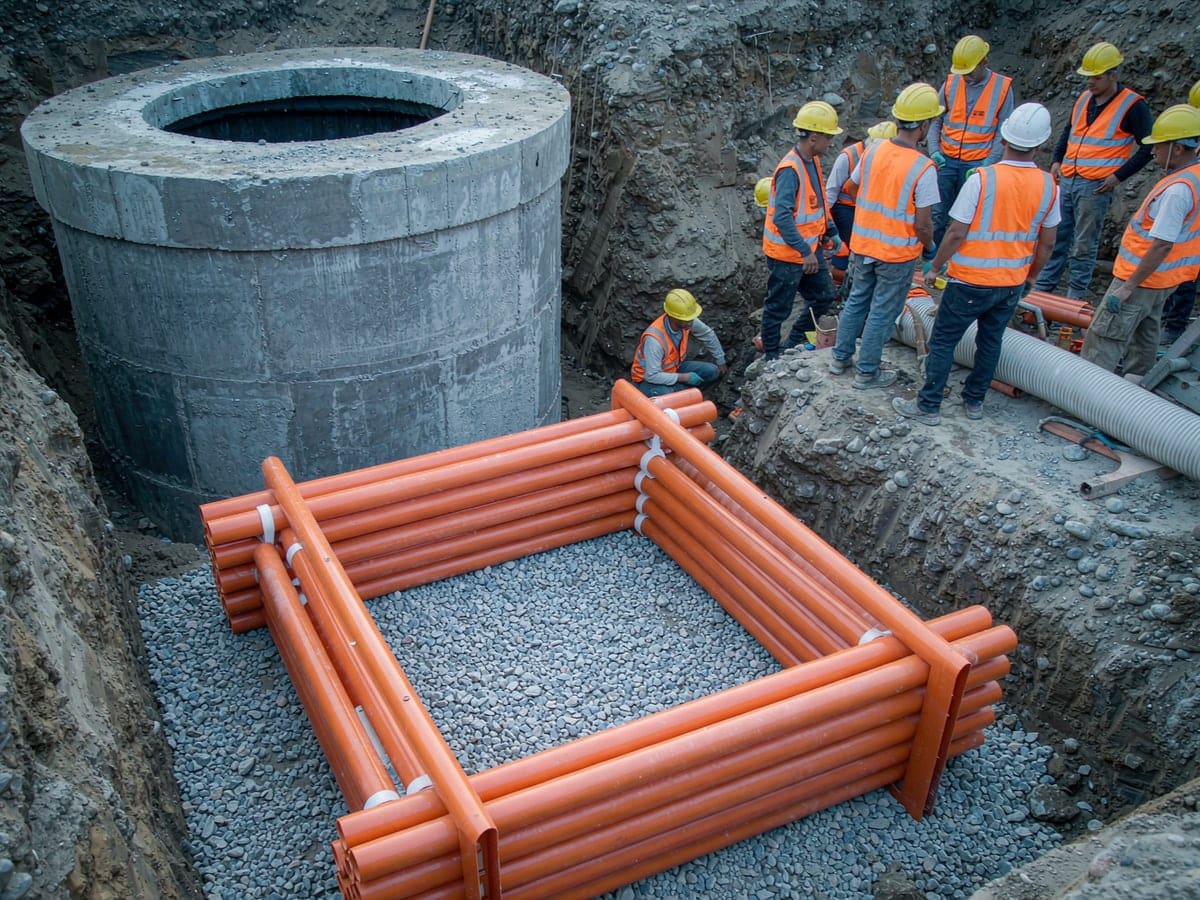
- Twelve-way duct bank in 3 × 4 arrangement with 75 mm spacers and concrete encasement at road crossings
- Inspection chambers every 60 m, with 3 m bending radius formed at each end
- Watertight socket fusion joints, tested at 0.1 MPa for 30 minutes per section
Crossings
Three crossings dominated the programme: a live railway, a four-lane avenue, and a storm culvert. All three were done by trenchless methods. Ducts were pre-assembled in 12 m strings, pulled through a 500 mm casing with a roller cradle to keep friction low, and the annulus grouted in one continuous pour. The railway crossing was completed inside a 36-hour possession window, with the duct bank capped and surveyed before the first train.
Result
The cable pull — 12 cables, longest single pull 640 m — was completed without a single duct deformation or joint leak. Insulation resistance and sheath tests passed first time. The utility has adopted the same duct bank detail for two further sections of the same line.